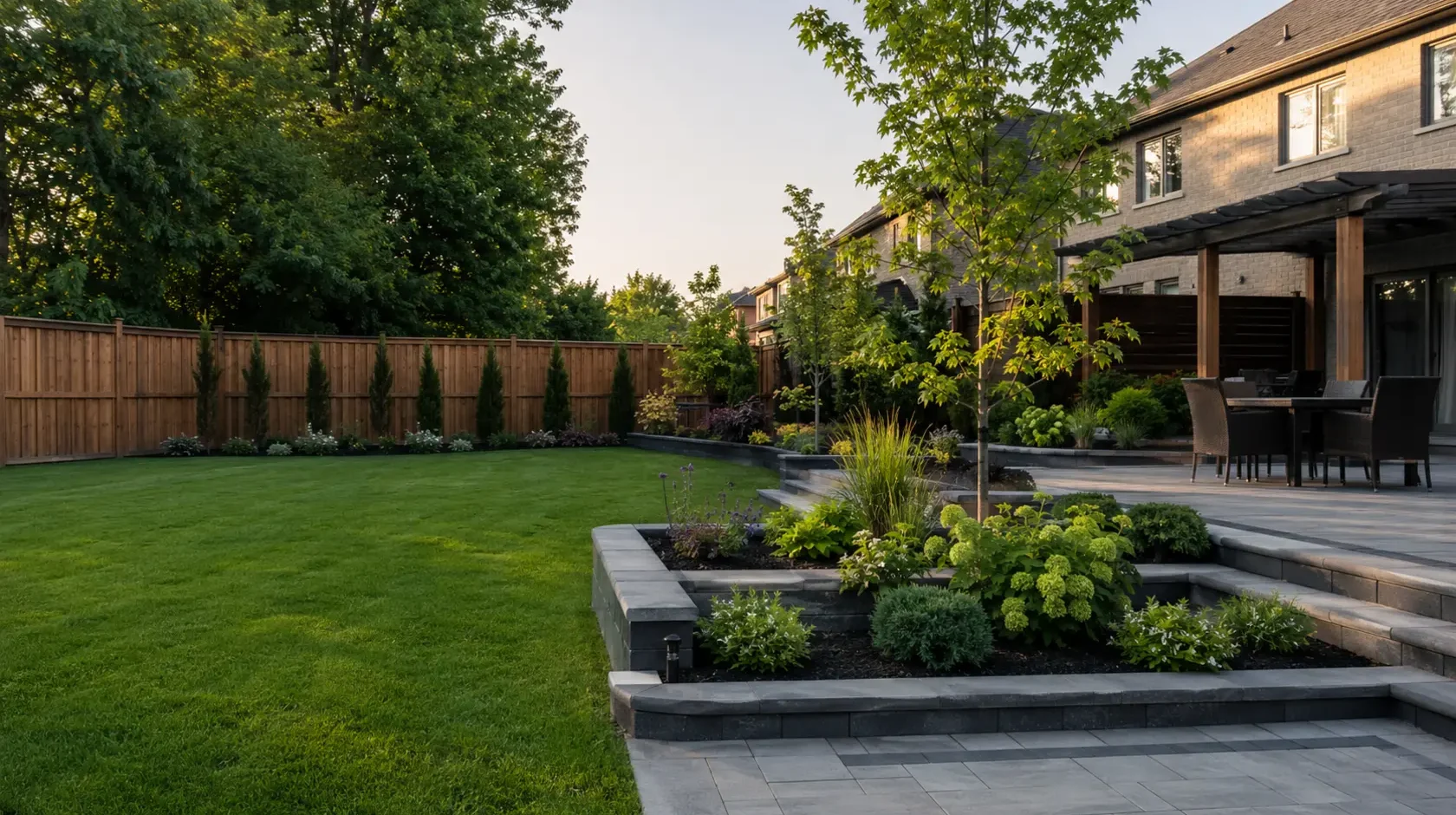
Reduce repetitive work without pretending the yard will maintain itself
In short: Low-maintenance landscaping uses a simpler layout, durable materials, well-matched plants, defined edges, access, and realistic systems to reduce routine mowing, watering, weeding, and repair. Every outdoor space still needs seasonal cleanup, inspection, plant care, surface cleaning, and occasional repair. The goal is to align that work with the time, mobility, budget, and appearance priorities of the household. The appropriate scope depends on the measured property, existing condition, access, intended use, material or product requirements, connected work, maintenance expectations, and any current municipal, utility, or specialist requirements.
Service area: Requests are accepted throughout Brampton, Ontario, subject to responding-provider availability and project fit.
Provider transparency: Brampton Landscaping is a service-information and quote-request website. Confirm the responding provider’s legal identity, contact information, insurance, qualifications, scope, price, and written terms before booking.
Maintenance pressures to reduce
Too much lawn or weekly work
Resize turf and simplify edges around how much routine care is realistic.
Plants repeatedly fail or overgrow
Use fewer well-suited plants at proper mature spacing.
Difficult corners and narrow access
Replace awkward maintenance zones with practical surfaces or planting.
When is low-maintenance landscaping the right starting point?
This work is most useful when several outdoor decisions affect one another: circulation, privacy, drainage, planting, storage, gathering space, access, and the visual relationship to the home. A smaller isolated repair may not need a full design scope.
The initial choice should follow the property condition, not a product photograph. Compare what each option is intended to accomplish, what preparation it assumes, and which facts still need inspection.
| Option or scope | When it may fit | What must be confirmed |
|---|---|---|
| Simplified patios and paths | Create durable usable areas with accessible edges and repairable material systems. | Confirm usable dimensions, drainage routes, access, maintenance capacity, and whether any structure or grade change needs approval. |
| Easy-care planting | Select suitable shrubs, ornamental grasses, groundcovers, and perennials with room to mature. | Confirm usable dimensions, drainage routes, access, maintenance capacity, and whether any structure or grade change needs approval. |
| Mulch, stone, or artificial turf | Use each surface where its heat, drainage, cleaning, and replacement needs make sense. | Confirm usable dimensions, drainage routes, access, maintenance capacity, and whether any structure or grade change needs approval. |
| Irrigation and clear access | Make watering, inspection, snow storage, bins, gates, and seasonal care easier. | Confirm usable dimensions, drainage routes, access, maintenance capacity, and whether any structure or grade change needs approval. |
Low-maintenance landscape strategies
Combine only the strategies that fit the site, budget, drainage, and desired appearance.
What affects a low-maintenance landscaping quote?
A useful quote separates visible finishes from the work needed to support them. Dimensions, quantities, access, removals, disposal, existing-condition repair, drainage, utilities, material specifications, protection, cleanup, tax, schedule, and exclusions should be clear enough to compare.
- Too much lawn or weekly work: Resize turf and simplify edges around how much routine care is realistic.
- Plants repeatedly fail or overgrow: Use fewer well-suited plants at proper mature spacing.
- Difficult corners and narrow access: Replace awkward maintenance zones with practical surfaces or planting.
- Simplified patios and paths: Create durable usable areas with accessible edges and repairable material systems.
- Easy-care planting: Select suitable shrubs, ornamental grasses, groundcovers, and perennials with room to mature.
- Mulch, stone, or artificial turf: Use each surface where its heat, drainage, cleaning, and replacement needs make sense.
- Irrigation and clear access: Make watering, inspection, snow storage, bins, gates, and seasonal care easier.
Photos and approximate dimensions can start the conversation, but a final scope may change after measurement, inspection, current product information, utility locates, or authority review.
How long can planning and work take?
Concept planning can begin in any season. Construction timing depends on ground conditions, material availability, permits where applicable, and the order of connected work. Allow extra lead time when decks, pools, basement entrances, lighting, or major grade changes are involved.
The written quote should identify site access, material staging, noise or dust, temporary closures, occupied-area protection, waste removal, weather delays, curing or establishment time, and when the area can return to normal use. No universal duration can be confirmed without the actual scope.
How does low-maintenance landscaping move from request to review?
- 01
Document the condition
Record too much lawn or weekly work, access, dimensions, drainage, fixed features, utilities, and the result the property needs.
- 02
Compare suitable options
Review simplified patios and paths against easy-care planting, preparation, maintenance, timing, and connected work.
- 03
Confirm scope and requirements
Confirm usable dimensions, drainage routes, access, maintenance capacity, and whether any structure or grade change needs approval. Put materials, exclusions, protection, cleanup, and change handling in writing.
- 04
Complete and review
Follow the accepted sequence, inspect the finished condition, document limitations, and provide product- and site-specific care instructions.
What happens after low-maintenance landscaping is completed?
The handover should identify watering, cleaning, seasonal inspection, plant establishment, joint or surface care, and any tasks that belong to a specialist. Maintenance expectations should influence the design before materials are chosen.
Website content cannot determine concealed soil, base, utility, structural, electrical, fuel, drainage, root, boundary, or product conditions. The accepted quote and qualified specialist instructions control where they differ from general planning guidance.
Design for winter, salt, drainage, and compact lots
Brampton landscapes still need space for snow, positive drainage, permeable areas, utility access, and plant material that tolerates local exposure. Replacing every soft area with hard surface may conflict with zoning or drainage needs.
Local and official-source information reviewed July 21, 2026.
Plan around the actual property
Confirm current City of Brampton, Ontario utility, product, and specialist requirements for the exact work. This page does not approve a permit, locate, design, product, or construction detail.
Official sources relevant to low-maintenance landscaping
These sources support the municipal, safety, or utility statements on this page. Requirements and source pages can change, so confirm the current rule for the specific property before work begins.
City of Brampton Residential Surface Drainage and Lot Grading Guidelines
The City explains that landscaping changes can interfere with swales and affect how surface water drains across residential lots.
City of Brampton Site Alteration Permit Guide
The guide distinguishes most minor residential landscaping from work that may require site-alteration review or a permit.
Source review: July 21, 2026. Municipal approval is determined by the responsible authority, not by this website.
Questions about low-maintenance landscaping
What is the lowest-maintenance yard surface?
There is no maintenance-free surface. Compare cleaning, weeds, heat, snow, drainage, repairs, lifespan, plant health, pet use, and replacement cost before choosing.
How is the quote prepared?
The scope should reflect property conditions, access, preparation, materials, removals, and connected work. A site review may be needed before the work can be priced accurately.
Can this service be combined with other landscaping work?
Yes. Related work is often easier to coordinate as one planned project, especially when grading, drainage, hardscaping, lawns, planting, or structures affect one another.
When should I start planning?
Start once you know the main outcome you want. Planning earlier provides more time to review the site, confirm requirements, choose materials, and coordinate seasonal availability.
What should I include in a low-maintenance landscaping quote request?
Include the Brampton property type, approximate work area, current concern, desired result, access limits, timing, and any related work. Photos are useful, but measurements, site conditions, materials, removals, utilities, permits, and specialist requirements may still need confirmation before a final quote.
What can change the recommended low-maintenance landscaping approach?
Confirm usable dimensions, drainage routes, access, maintenance capacity, and whether any structure or grade change needs approval. The recommended scope can change after inspection, measurements, current product information, utility locates, or municipal requirements are reviewed.
How much disruption should the property expect?
Concept planning can begin in any season. Construction timing depends on ground conditions, material availability, permits where applicable, and the order of connected work. Allow extra lead time when decks, pools, basement entrances, lighting, or major grade changes are involved. The quote should identify access, staging, noise, removals, temporary closures, cleanup, and any period when the area cannot be used normally.
Continue planning the property
Start at the complete Brampton landscaping services directory, read the related guide for a deeper planning comparison, or use the full quote form for low-maintenance landscaping.