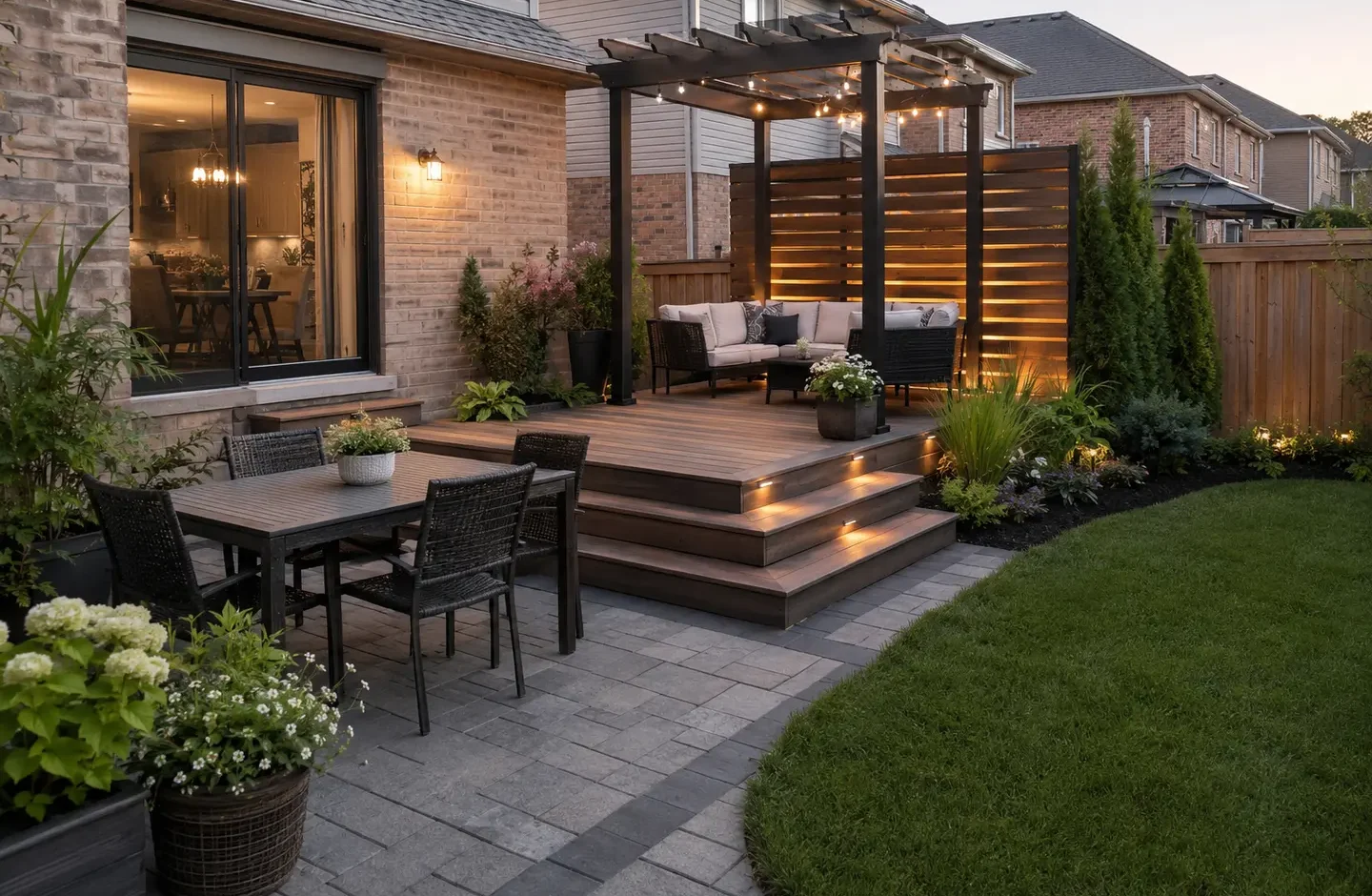
A small backyard can support dining, play, gardening, privacy, and greenery, but trying to maximize every feature can make the space feel smaller. A clear hierarchy is more useful than a long wish list.
Start with the main activity
Decide what the backyard needs to do most often. That might be family dining, a play lawn, quiet seating, gardening, or low-maintenance entertaining. Give the primary use enough space before fitting secondary features around it.
Measure furniture and circulation
A patio drawn as a rectangle can look generous until chairs are pulled out. Measure tables, sofas, barbecues, storage, and the routes people use between doors, gates, stairs, and lawns.
Use fewer materials
Too many paver colours, border types, fence treatments, decorative stones, and plant styles can visually divide a compact yard. A restrained palette helps connected areas feel larger.
Build flexible zones
A simple lawn can support play, gatherings, and open visual space. A wide patio edge can act as extra seating. A pergola can support shade and vertical planting. A storage bench can reduce the need for a separate furniture zone.
Plan privacy without creating a wall
Use fences or screens where immediate coverage is needed and layer them with shrubs, ornamental grasses, or small trees where space allows. Focus screening on specific views instead of surrounding every edge with dense planting.
Protect drainage and access
Do not fill required swales, block water routes, or make gates too narrow for maintenance equipment. Basement entrances, utilities, downspouts, air-conditioning equipment, and service paths need practical clearances.
Leave visual breathing room
Open lawn, a simple garden surface, or a clear sightline is not wasted space. It gives the main features room to stand out and makes the backyard easier to understand at a glance.
The best compact yard is not the one with the most features. It is the one where the most important features fit comfortably.