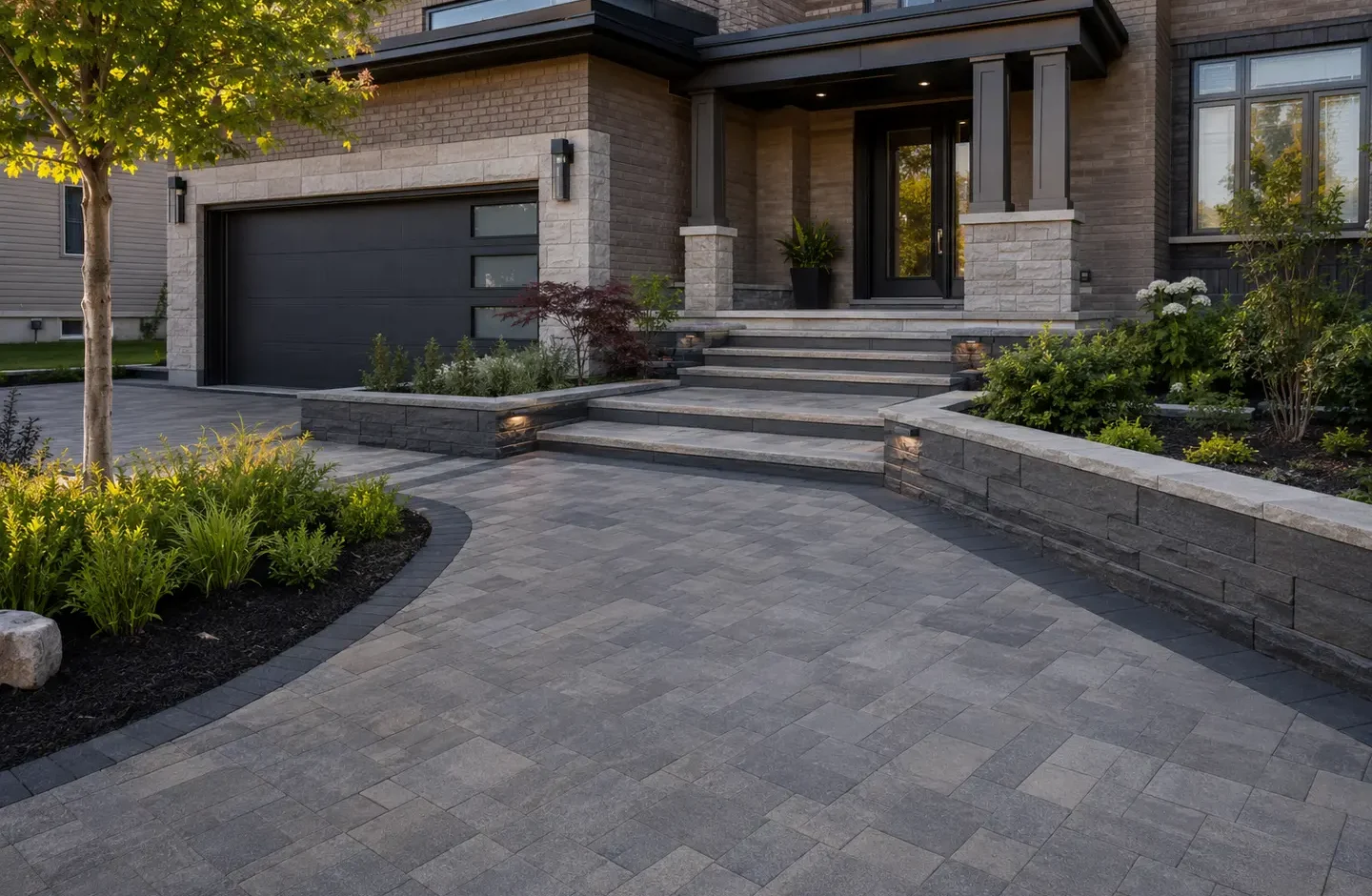
Direct answer: Sunken interlock is normally a symptom of lost support, moving water, failed edges, disturbed soil, unsuitable construction, or repeated loads. A durable repair begins by mapping the settlement pattern and water path, then lifting enough pavers to inspect and rebuild the affected layers. Simply adding joint sand or levelling the visible depression does not correct a weak base, blocked drainage route, or spreading edge.
What is happening below a sunken paver?
A paver is the finish layer of a system. Pedestrian or vehicle loads pass through the paver and bedding into a compacted granular base and the underlying soil. Edge restraints keep the field from spreading, while surface elevations move water away. When support changes in one part of that system, the surface records the movement.
Small seasonal movement can look different from a persistent low area. Note whether the depression grows, holds water, rocks underfoot, follows a trench, appears in wheel paths, or sits beside an unsupported edge. Those observations make the repair discussion more specific.
How can base preparation cause settlement?
A base can continue compressing when it is too thin for the expected load, placed over unstable soil, contaminated with unsuitable material, or compacted in lifts that are too deep. A repaired area should be excavated far enough to reach dependable support rather than stopping at the first material that looks granular.
The required construction varies by product, soil, load, drainage, and installer specification. Website advice cannot determine a universal excavation depth. The quote should identify the proposed materials, lift method, compaction approach, and extent of rebuilding.
Why does water matter to an interlock repair?
Downspouts, hard-surface runoff, snowmelt, blocked swales, and poorly directed grades can saturate or erode support. A low spot that continually collects water may settle again even after the pavers are neatly reset. Trace the source, route, collection point, and safe outlet as part of the repair.
The City of Brampton warns that landscaping changes can interfere with residential swales. A repair must not solve one low area by blocking or redirecting drainage toward a neighbouring property. More complex grade changes may need municipal or professional review.
What do edges, transitions, and loads reveal?
An outward-moving border can open joints and let the paver field migrate. Settlement beside a garage, step, curb, wall, drain, or utility cover can also reflect a rigid transition that was not supported or detailed consistently. Repeated turning vehicles create different stress from normal foot traffic.
Map the limits of movement before lifting begins. A few unstable pavers at a garden edge may need a different repair from continuous wheel-path settlement or a patio corner that receives roof runoff.
Can the existing pavers be reused?
Pavers can often be reused when they are structurally sound, can be cleaned without damage, and enough matching units are available for cuts or breakage. Stains, surface wear, discontinued sizes, colour variation, and previous sealing can affect the finished appearance even when the pavers remain functional.
Ask how lifted material will be stored and sorted. The written quote should address broken pieces, replacement colour differences, cuts, borders, joint material, and whether the repaired area is expected to match untouched sections.
When is a local repair reasonable?
A local repair is more plausible when the cause and boundaries are identifiable, surrounding surfaces remain stable, drainage can be corrected, and reusable pavers are available. A larger reconstruction may be more practical when movement is widespread, the base is consistently weak, elevations are wrong, or the owner wants a new layout.
Price should not be the only distinction. Compare how each scope addresses the cause, transitions, warranty limitations, and risk that movement outside the repaired area will continue.
What disruption should a Brampton property expect?
Repair involves lifting pavers, staging reusable material, excavating failed support, bringing in granular material, compacting, cutting, resetting, joint filling, and cleanup. Vehicle or pedestrian access may be restricted. Narrow side yards and shared driveways can change equipment and staging options.
Utility locates are required before excavation, including landscaping and paving work. Privately owned systems such as irrigation, lighting, pool lines, or drainage pipes may need separate private locating or owner information.
What should be confirmed in the final repair scope?
The scope should identify repair dimensions, cause assumptions, excavation, disposal, base and bedding materials, edge work, drainage changes, paver reuse, replacement allowances, transitions, jointing, protection, access restrictions, cleanup, and exclusions. It should also explain how hidden conditions and scope changes are handled.
Photograph the area before and after lifting. A clear record helps the owner understand what was rebuilt and prevents a neat finished surface from hiding an unresolved limitation.
Compare common interlock responses
| Response | Best fit | Main limitation |
|---|---|---|
| Joint-sand top-up | Stable pavers with depleted joints | Does not rebuild base or correct settlement |
| Local lift and relay | Bounded settlement with a correctable cause | Movement outside the repair may continue |
| Drainage plus repair | Settlement connected to a known water path | Needs a legal and maintainable outlet |
| Full reconstruction | Widespread failure or major layout change | Greater cost, disruption, and material decisions |
Action checklist
- Photograph the settlement pattern after rain and in dry conditions.
- Mark downspouts, drains, swales, edges, walls, steps, and utility covers.
- Ask whether the pavers and border units are still available.
- Confirm vehicle, pedestrian, and snow-storage loads.
- Request utility and private-system locate information before excavation.
- Compare written repair limits, materials, drainage work, cleanup, and exclusions.
- Plan access restrictions and an alternate route during work.
Common mistakes and why they matter
Treating the depression as the cause
The visible low spot shows where support was lost; it does not identify why the support changed.
Using joint sand as structural fill
Joint material stabilizes joints but cannot replace excavated and compacted base beneath a settled paver.
Ignoring nearby water
A downspout, low grade, or blocked swale can undermine an otherwise careful relay.
Assuming a perfect colour match
Existing pavers weather, and discontinued units or replacement batches may differ even when dimensions match.
Related Brampton landscaping resources
Interlock repair and relevelling, Drainage solutions, Interlock cleaning and sealing, Request a quote.
Interlock repair questions
Can sunken interlock always be repaired?
Not always. Repair suitability depends on the failure area, base, drainage, edges, transitions, paver condition, and whether movement extends beyond the visible low spot.
Will sealing stop interlock from sinking?
No. A sealer affects the surface and joints according to the product; it does not rebuild structural support below the pavers.
Why does settlement appear in driveway wheel paths?
Repeated vehicle loads can expose weak, thin, disturbed, or poorly compacted support. Drainage and turning movements can contribute as well.
When should drainage be assessed with the repair?
Assess it when the area holds water, receives downspout discharge, sits beside a changed grade, or repeatedly moves after previous levelling.
Primary sources for this guide
These sources support the municipal, safety, or utility statements on this page. Requirements and source pages can change, so confirm the current rule for the specific property before work begins.
City of Brampton Residential Surface Drainage and Lot Grading Guidelines
The City explains that landscaping changes can interfere with swales and affect how surface water drains across residential lots.
Ontario One Call Homeowner Locate Requirements
Ontario One Call states that homeowners or contractors must submit a locate request before excavation on public or private property.
Source review: July 21, 2026. Municipal approval is determined by the responsible authority, not by this website.